
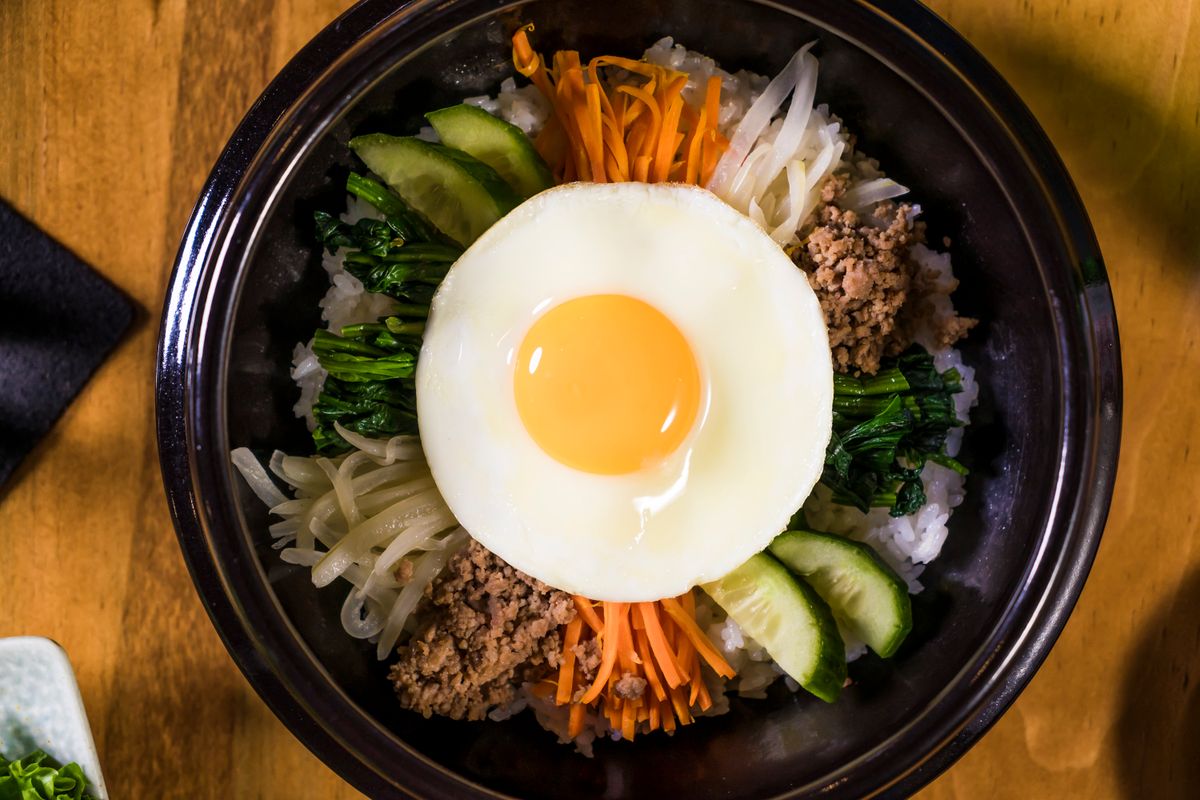
Bibimbap literally translates to “mixed rice” in Korean, and that simplicity belies the extraordinary harmony of flavors and textures in this iconic dish. A bowl of warm steamed rice is crowned with an array of colorful seasoned vegetables (namul), savory marinated beef, a crispy fried egg, and a fiery dollop of gochujang sauce. The magic happens when you mix it all together.
Ingredients
Rice & Beef
- 4 cups cooked short-grain white rice
- 12 oz beef sirloin or ribeye, thinly sliced
- 2 tbsp soy sauce
- 1 tbsp sesame oil
- 1 tbsp sugar
- 2 cloves garlic, minced
- 1 tsp freshly ground black pepper
Vegetable Toppings (Namul)
- 2 cups fresh spinach, blanched and seasoned with sesame oil and salt
- 1 large carrot, julienned and sauteed
- 1 zucchini, julienned and sauteed
- 1 cup bean sprouts, blanched
- 4 shiitake mushrooms, sliced and sauteed
- 1/2 cup kimchi (optional but recommended)
- Sesame oil and salt for seasoning vegetables
Sauce & Garnish
- 4 eggs
- 3 tbsp gochujang (Korean red pepper paste)
- 1 tbsp sesame oil
- 1 tbsp rice vinegar
- 1 tsp sugar
- Toasted sesame seeds
- Sliced scallions
Instructions
- Marinate the beef: Toss sliced beef with soy sauce, sesame oil, sugar, garlic, and pepper. Let marinate while you prepare the vegetables (at least 15 minutes).
- Prepare the vegetables: Each vegetable is prepared separately to maintain distinct flavors and textures. Blanch spinach 30 seconds, squeeze dry, toss with sesame oil and salt. Saute carrots with a pinch of salt 2-3 minutes. Saute zucchini 2 minutes. Blanch bean sprouts 1 minute, season with sesame oil. Saute mushrooms with a splash of soy sauce.
- Cook the beef: Heat a skillet over high heat. Cook marinated beef for 2-3 minutes until browned and slightly caramelized. Set aside.
- Fry the eggs: Fry 4 eggs sunny-side up in a little oil. The yolk should still be runny.
- Make the sauce: Mix gochujang, sesame oil, rice vinegar, and sugar until smooth.
- Assemble: Divide warm rice among 4 bowls. Arrange vegetables, beef, and kimchi in sections on top of the rice. Place a fried egg in the center. Drizzle with gochujang sauce and sprinkle with sesame seeds and scallions.
- Mix and eat: At the table, break the egg yolk and mix everything together vigorously. The heat of the rice will slightly cook the yolk into a rich, creamy sauce that binds everything together.
Pro Tips
- For dolsot (stone pot) bibimbap, heat a stone bowl with sesame oil until smoking, add the rice and toppings. The stone bowl creates an irresistible crispy rice crust on the bottom.
- Prepare all your vegetables before you start assembling. Bibimbap is about mise en place — everything in its place.
- The runny egg yolk is essential. It acts as a sauce that brings everything together. Do not overcook it.
Serving Suggestions
Serve immediately with extra gochujang on the side for those who like more heat. Traditional accompaniments include a bowl of doenjang jjigae (soybean paste stew) and an assortment of banchan (Korean side dishes) like kimchi and pickled radish.
Prep Time: 40 minutes | Cook Time: 20 minutes | Servings: 4
You Might Also Love
- Korean Galbi Short Ribs — Sweet-savory marinated ribs grilled to perfection
- Korean Kimchi Pancakes — Crispy, spicy pancakes loaded with kimchi
- Korean Banana Milk — Korea’s favorite sweet, creamy banana drink
🍳 Recommended Kitchen Tools
Level up this recipe with the right gear. As an Amazon Associate, Fork & Globe earns from qualifying purchases.
- 🔗 Korean Stone Bibimbap Bowls — Creates the signature crispy rice crust
- 🔗 Pure Sesame Oil — Essential finishing touch
- 🔗 Gochujang Paste — Authentic Korean chili paste
Leave a Reply