
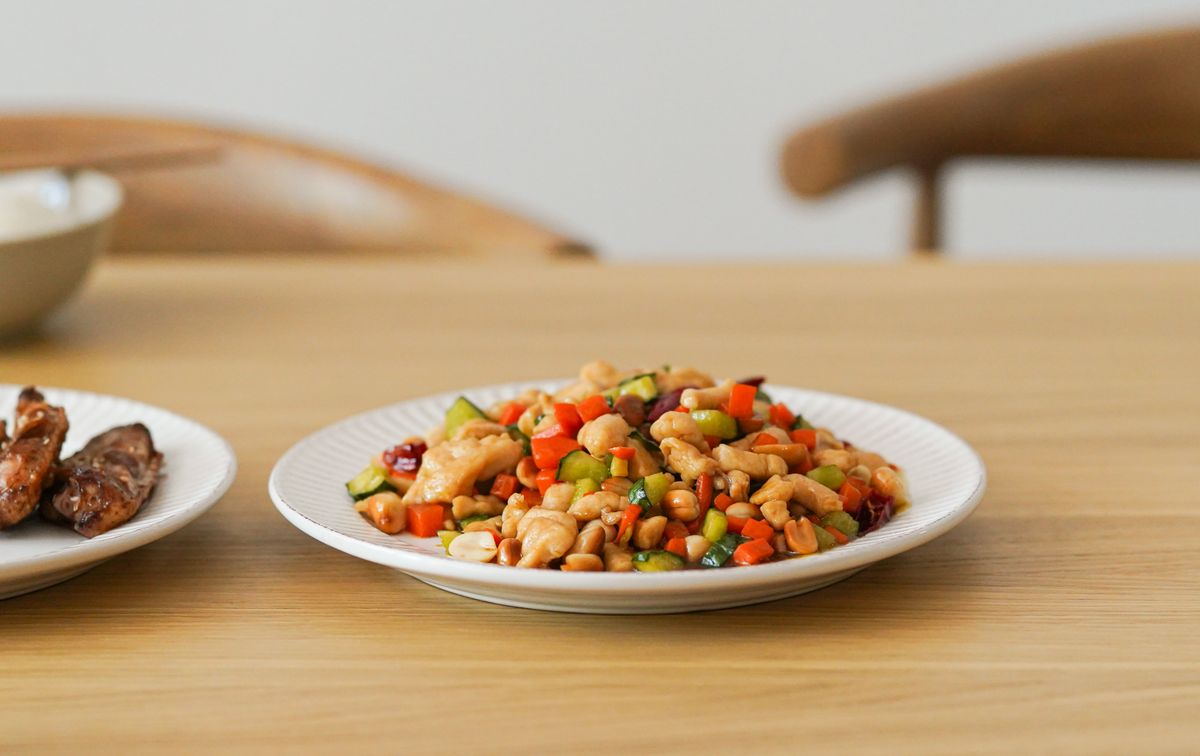
Kung Pao Chicken is a legendary dish from China’s Sichuan province, known for its bold combination of spicy, sweet, and savory flavors with a distinctive numbing sensation from Sichuan peppercorns. Named after a Qing Dynasty official, Ding Baozhen (whose title was Gong Bao), this stir-fry has become one of the most popular Chinese dishes worldwide. With its tender chicken, crunchy peanuts, and glossy sauce coating every bite, it’s a restaurant favorite you can master at home.
Why You’ll Love This Recipe
- Restaurant-Quality Flavor: Achieve the authentic taste of your favorite Chinese restaurant at home
- Perfect Balance: Sweet, spicy, savory, and tangy notes harmonize beautifully
- Quick Cooking: Once prepped, the actual cooking takes less than 10 minutes
- Customizable Heat: Adjust the spice level to suit your preference
Ingredients
For the Chicken Marinade:
- 1½ pounds boneless, skinless chicken thighs, cut into ¾-inch cubes
- 2 tablespoons soy sauce
- 1 tablespoon Shaoxing wine (or dry sherry)
- 2 teaspoons cornstarch
For the Sauce:
- 3 tablespoons soy sauce
- 2 tablespoons Chinese black vinegar (or rice vinegar)
- 2 tablespoons hoisin sauce
- 1 tablespoon sugar
- 2 teaspoons cornstarch
- 2 teaspoons sesame oil
- ¼ cup chicken broth or water
For the Stir-Fry:
- 3 tablespoons vegetable oil, divided
- 10-12 dried red chilies
- 1 teaspoon Sichuan peppercorns (optional but recommended)
- 4 cloves garlic, minced
- 1-inch piece fresh ginger, minced
- 1 red bell pepper, cut into ¾-inch pieces
- 4 green onions, white and green parts separated, cut into 1-inch pieces
- ⅔ cup roasted unsalted peanuts
Instructions
- Marinate the Chicken: In a medium bowl, combine chicken cubes with 2 tablespoons soy sauce, Shaoxing wine, and 2 teaspoons cornstarch. Mix well and let marinate for 15-20 minutes at room temperature.
- Prepare the Sauce: In a small bowl, whisk together 3 tablespoons soy sauce, vinegar, hoisin sauce, sugar, 2 teaspoons cornstarch, sesame oil, and chicken broth until the cornstarch is fully dissolved. Set aside.
- Prep All Ingredients: Have all your ingredients measured, chopped, and ready to go. Stir-frying happens fast, so mise en place is crucial.
- Cook the Chicken: Heat 2 tablespoons of vegetable oil in a large wok or skillet over high heat until smoking. Add marinated chicken in a single layer. Let it sear undisturbed for 1-2 minutes, then stir-fry for another 2-3 minutes until just cooked through and lightly golden. Remove chicken to a plate.
- Fry Aromatics: Add remaining 1 tablespoon oil to the wok. Add dried chilies and Sichuan peppercorns, stirring constantly for 30 seconds until fragrant (don’t let them burn). Add garlic and ginger, stir-frying for another 15 seconds.
- Add Vegetables: Toss in bell pepper and the white parts of green onions. Stir-fry for 1-2 minutes until the pepper begins to soften but remains crisp.
- Combine Everything: Return the chicken to the wok. Give the sauce a quick stir (cornstarch settles) and pour it over the chicken and vegetables. Toss everything together, cooking for 1-2 minutes until the sauce thickens and coats everything with a glossy sheen.
- Finish: Add peanuts and the green parts of the green onions. Toss for 30 seconds to combine.
- Serve: Transfer to a serving dish immediately. Serve hot over steamed white rice or fried rice.
Pro Tips
- Use Chicken Thighs: Thigh meat stays juicier and more tender than breast meat during high-heat stir-frying. It also has more flavor.
- High Heat is Key: Your wok or pan should be smoking hot. This creates the characteristic “wok hei” (breath of the wok) flavor that defines great Chinese stir-fries.
- Control the Heat Level: Use fewer dried chilies for mild heat, or add fresh Thai chilies for extra kick. You can also remove the chilies before serving—they’re primarily for flavoring the oil.
You Might Also Love
- Chinese Spring Rolls — Crispy rolls stuffed with veggies — a classic starter
- Korean Bibimbap — A vibrant Korean rice bowl with bold flavors
- Japanese Gyoza Dumplings — Pan-fried dumplings from across the East Asian kitchen
🍳 Recommended Kitchen Tools
Level up this recipe with the right gear. As an Amazon Associate, Fork & Globe earns from qualifying purchases.
- 🔗 Flat Bottom Wok — Perfect for home stovetops
- 🔗 Wok Spatula Set — Essential Chinese cooking tools
- 🔗 —
Leave a Reply